May 18th, 2025, marked the 52nd year since Comrade Ibrahim Kaypakkaya was tortured and killed by the fascist Turkish state in the dungeons of Diyarbakir Military Prison. Much has been said about this fierce, defiant and brave comrade, who gave his life for the sake of developing a communist line and a combative communist party, basing himself on the principles and teachings of Marx, Engels, Lenin, Stalin and Mao Zedong, breaking away from the revisionist tendencies of his time that threw themselves into the whirlpools of reformism, legalism and opportunism. At only the age of 23, on 24th of April 1972, he founded the Communist Party of Turkey (Marxist-Leninist), TKP(ML) [predecessor of MKP], with 11 comrades in a cave in Kurecik, Malatya. Just four months later, he founded the people’s army, the Workers’ and Peasants’ Liberation Army of Turkey, TIKKO.
He travelled from province to province, from village to village, basing his analysis of classes in his geography on a scientific Marxist foundation. The National Intelligence Agency of Turkey labelled comrade Kaypakkaya as the “most dangerous revolutionary in the history of Turkey” to this day. Even just carrying a picture of him in public is enough to get arrested and charged with “being a member of a terrorist organization”. He carried all the character traits, personality and ideological clarity to become a leader and organizer of workers’ and peasants across Turkey. Whenever he visited a village, the villagers would greet him with eagerness and enthusiasm, expressing their desire to take up arms and to face the political enemy with the barrels of their guns.
Within the first year of founding TKP(ML) and TIKKO, the organization managed to blow up 6 major bridges used for military logistics across Dersim. Comrade Kaypakkkaya managed to build an underground organizational network that spanned across Dersim and Malatya provinces within this first year of the party. He established village committees and underground libraries for studying Marxism, turning the villagers both into leaders and fighters of the communist party. By 1973, Kaypakkaya was the most wanted revolutionary in Turkey, due to his ability to single handedly organize the oppressed masses anywhere he was under the banner of Marxism-Leninism-Maoism.
Earlier in 1971, the Turkish military couped the civilian government and took control under the directives of US imperialism and declared state of emergency, due to the break through in the revolutionary movement from reformism to armed revolutionary war. Prior to Kaypakkaya making his place in history, the fascist military junta, under US imperialist directives, had already been combatting Deniz Gezmish’s THKO (People’s Liberation Army of Turkey, a focoist movement that lacked theoretical integrity and clarity but was embraced by the masses), as well as Mahir Chayan’s THKP/C (People’s Liberation Party/Front of Turkey)
By 1972, Deniz Gezmish and his comrades were captured by the military. Mahir Chayan, in an attempt to rescue Deniz Gezmish and his comrades, in trench solidarity despite being the leaders of separate revolutionary organizations, kidnapped 2 Canadian NATO personnel from a military base and held them hostage, wishing to exchange them for the lives of Deniz Gezmish and his comrades. The fascist military junta, which disregarded any value for human life, approached the hostage situation not with the intent of saving lives but instead opted for total annihilation. This resulted in a shoot out between THKP/C leading cadres and the military. As a result, Mahir Chayan, his 9 comrades as well as the 2 NATO personnel, were killed by the military. 2 months after this incident, Deniz Gezmish and his comrades were executed by hanging.
By this point, the armed revolutionary front was forced into a retreat due to suffering devastating blows, with majority of revolutionary organizations losing their leading cadres. At this time, Kaypakkaya was the only threat left for the fascist military junta. Throughout the end of 1972 and the early winter of 1973, over 7000 Turkish commandos were deployed in the mountains of Dersim, searching for comrade Kaypakkaya.
While engaged in struggle in the Dersim region, where TKP(ML) activities were concentrated, on January 24, 1973, Kaypakkaya and his comrades were unknowingly surrounded by the military in the Vartinik hamlet of Gökçek village, Dersim Central District, due to the comrade on guard duty falling asleep. While fleeing, comrade Ali Haydar Yildiz, threw a Chinese-made bomb they had crafted themselves at the soldiers, but it fell short and did not manage to cover their retreat. As they were escaping, a bullet hit Ali Haydar Yıldız, causing him to fall to the ground. At the same time, Kaypakkaya was hit by buckshot in the neck and collapsed. When the military arrived, Kaypakkaya pretended to be dead. A fake ID labeled “Haydar Mecit” was found on him, which led the military to pursue the others. After the soldiers left, Kaypakkaya escaped. Due to exhaustion, he had to leave his comrade Ali Haydar Yıldiz behind. As a result of the clash, Ali Haydar Yıldız, one of the first commanders of TIKKO, became the first martyr of the People’s War at the age of 19, while Kaypakkaya managed to flee the scene wounded. Kaypakkaya hid in the mountains for about five days while wounded, but due to lack of food, he descended into a village where he was reported by a teacher named Cafer Atan and captured five days later.
While fleeing after the clash, the soles of his boots tore. Being both wounded and soaked for five days caused his feet to become severely cold. Although he received some degree of care in a village he passed through, it was too late, and the cold persisted. On top of that, he was deliberately forced to walk for hours despite his injuries, which led to numbness in his toes. As a result, in the hospital where he was taken, on February 20, 1973, his toes were amputated. All the toes on his right foot and all but the little toe on his left foot were amputated.
After four months of interrogation and torture in Diyarbakır, on May 9, 1973, Kaypakkaya informed his father that the interrogation had ended and that there was no issue with meeting. Shortly before he was to appear in court, according to eyewitnesses, he was taken for one final interrogation on May 16, 1973, and died on May 18, 1973. The official cause of death was recorded as suicide.
The following day, his lifeless body was handed over to his father, who had come to see his son. The body had numerous wounds; his head had been severed, and his genitals were mutilated.
His grave is in his birthplace, Karakaya.
His clarity of thought, his rejection of reformism and revisionism, and his unwavering commitment to Marxism-Leninism-Maoism laid the foundation for a revolutionary path that still inspires thousands. He did not die begging for mercy or compromising his ideals; he died unbent, unbroken, and undefeated—refusing even under torture to betray his comrades or his cause. The fascist Turkish state may have torn his body apart, but it could not silence his ideas, nor erase the truth he unearthed for the oppressed of Turkey and Kurdistan.
Kaypakkaya’s legacy is not one of martyrdom alone, but of militant continuity. The Maoist Party managed to reorganize its central structure after comrade Kaypakkaya’s death and has continued the struggle with the sustained protracted people’s war strategy. In this war, the Maoist Party has sent off its 5 Secretary Generals and hundreds of partisan people’s fighters to immortality. People’s Liberation Army commanders like comrade Nasir and comrade Lenko, whom downed helicopters, tanks were seized, outposts destroyed and the enemy armies defeated in countless skirmishes in different dates and places.
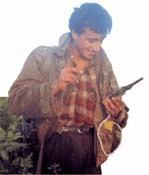
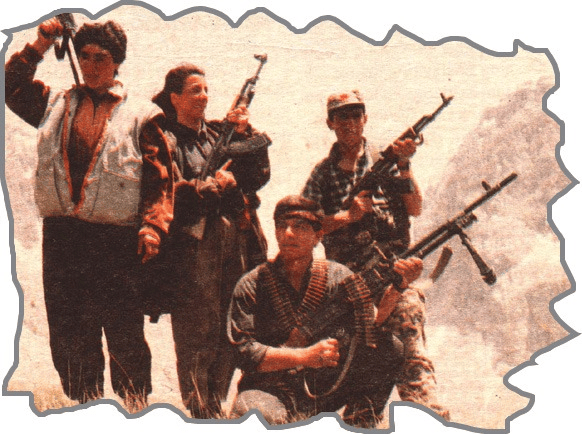
In every village that resists, in every worker that strikes, in every guerrilla that raises a rifle in defiance, the red line he drew against fascism and capitulation continues to burn. To commemorate Kaypakkaya is not merely to mourn his death—it is to take up his weapon, his words, and his unwavering faith in the power of the people to make revolution.
Let the name of Comrade Kaypakkaya forever echo in the mountains, in the factories, and in the hearts of all who dare to dream of a new world.
“…look for ways to save me and try to rescue me. My execution or at the very least my life-imprisonment is certain. I wish a stronger, tougher, more determined war to all of you. Farewell.”
-Final letter of Ibrahim Kaypakkaya to his comrades.
Long live the revolutionary legacy of İbrahim Kaypakkaya!
Long live Marxism-Leninism-Maoism!
Those who devoted their limited lives to a limitless cause are immortal!
Glory to the People’s War that shaped our revolutionary path in Turkey/North Kurdistan!






